The Linguistic Switcheroo: Navigating Style-Shifts in College Discourse
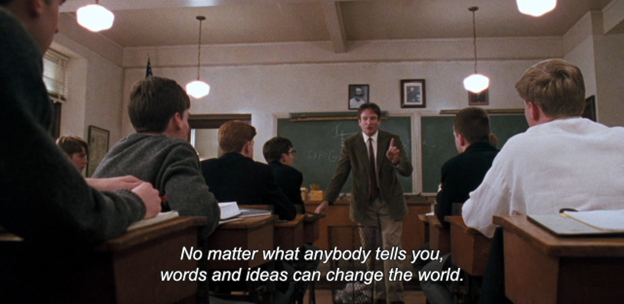
This blog entry explores the dynamic world of language use among college students at UCLA, focusing on how they adjust their linguistic style in academic environments. We delve into the phenomenon of style-switching, where students navigate between informal conversations with peers and formal interactions with professors. Through careful observation and analysis, our research uncovers the nuances of word choice, tone, and syntax in these differing contexts. We aim to understand how social settings influence language socialization within academic communities. Our findings reveal that students tend to employ a more casual, slang-infused language among peers while adopting a more structured and formal language when engaging with faculty. These findings highlight the adaptability of linguistic practices within differing contexts, as seen in the discrepancy between a languid and relaxed setting versus an academic one, and reveal deeper insight into the social dynamics at play. Join us in exploring the intricate play of language in the college setting, where each conversation reflects the complex interplay of social norms, power dynamics, and cultural identity.
Introduction
Our research focuses on the intricate ways college students adjust their language in different academic settings, particularly at UCLA. Previous studies, like those by Patricia A. Duff and others, have highlighted language socialization in academic contexts. However, there’s less focus on how students’ language shifts in real-time interactions between diverse groups such as peers and professors. We aim to bridge this gap by analyzing how UCLA students’ word choice, tone, and syntax vary when communicating with peers versus academic staff. Our hypothesis posits that students’ language becomes more informal, slang-heavy, and less complex in peer interactions compared to more formal, carefully structured conversations with faculty, reflecting underlying power dynamics and social norms.
Here’s a link to a video by Cambridge University Press that explains “academic language” to give you an idea of what we’ll be discussing in this blog!
Methods
In our study, we centered our investigation on the linguistic style shifts among UCLA students in academic contexts. Our focus was on two primary interaction scenarios: between students themselves and between students and their professors.
People and Contexts Observed:
- Student-Student Interactions: Conversations among peers, both within and outside classroom settings, were recorded. These interactions provided insights into the informal communication styles prevalent in peer groups.
- Student-Professor Interactions: We also observed and recorded interactions between students and faculty members. This setting offered a contrasting view of more formal and structured communication.
What We Analyzed:
- Word Choice: We paid close attention to the vocabulary used in different social settings. Our analysis focused on identifying the use of informal language and slang among peers, compared to more formal and academic language in interactions with professors.
- Syntax and Structure: The complexity of sentence construction and use of grammatical structures were analyzed to observe variations in formality and complexity.
- Tone: The emotional and attitudinal aspects of speech, such as enthusiasm, respect, or hesitation, were observed to understand the relational dynamics in different interactions. Take a look at this video to better understand the importance of how we say things, beyond what we say.
Data Collection Method:
- A mix of participant observation and ethnographic fieldwork was employed. This involved walking with, talking with, and recording the daily life and conversations of students. Both audio recordings and hand-transcriptions of conversations were utilized.
By focusing on these observable elements in communication, our study aimed to illuminate how linguistic practices are adapted to different social contexts within the academic environment. Technicalities not central to our primary analysis, such as detailed linguistic theories, were omitted for clarity and accessibility to a general audience. This approach ensured that our study remained engaging and understandable, while still maintaining academic rigor.
Results
Here is what some of our data ended up looking like:
Student-Student Conversation
Student 1: Yeah, the bystander effect. It’s like, when there’s a bunch of people, everyone thinks someone else will step up. Ends up with no one helping. Pretty messed up and craaaazy.
Student 2: That’s tea. It makes you wonder, huh? Did you guys then talk about how different countries do things differently?
Student 1: Oh yeah, it’s all about the culture vibe. Like, some places are all “pick me girls,” while others are like “No worry girly.” (laughing)
Student 2: No literallyyyy. Social psych’s got some real “shit” going on.
Student-Professor Conversation
Student: In the lecture, you mentioned the bystander effect. Can you explain more on that?
Professor: Oh yes I can. So, the bystander effect refers to the phenomenon where individuals are less likely to offer help to a victim when other people are present. It’s often due to a fear of responsibility, where the bystander assumes someone else will intervene.
Student: I see. So how does this relate to social responsibility?
Professor: Hmm social responsibility is an individual’s obligation to act for the benefit of society at large. So like in the context of the bystander effect, it challenges the individuals to overcome the fear of responsibility and take action when they witness someone in need of help.
Student: Oh ok I get it. And last question (slight haha) what about the role of culture in social psychology?
Professor: So culture plays a significant role in shaping our social behaviors and attitudes. Different cultures have different norms and values, which could influence how people perceive and interact with each other. Like for example, individualistic cultures might emphasize personal achievements, while collectivist cultures focus on their group harmony.
Student: OK I got that down. Thank you so much for your time, Professor!
So what does this tell us?
These two conversations, both of which cover the “bystander effect” of social psychology, show completely different ways of having very similar conversations. Even though both conversations cover the bystander effect, and in each one the speaker is asking questions while one is answering and explaining, the language used is very different.
The use of slang in the student-student conversation – words like “tea,” “craaaazy,” and “literalyyyy” – are not present in the student-professor conversation. This suggests that students are perfectly capable of discussing academic topics in the way they ‘typically’ speak – with friends and in their social interactions, but they are intentionally censoring themselves and electing for “academic language” when speaking with professors.
The fact that the professor, here, is not speaking with the same total academic language, and still uses phrases such as, “so like” and “hmmm,” suggests that they do not feel the same sense of need to maintain formality in the way the student does. This shows us that despite the absence of reciprocal formality within student-professor interactions, when speaking with a faculty member or professor, the student still understands their position in this conversation as relatively powerless and more subservient.
In analyzing syntax and structure, we found conflicting conclusions in students’ willingness to formalize their speech around professors versus their peers. In conversations with peers, students tended to include longer sentences that more frequently lacked correct grammatical structure and syntax as ruled by academic standards of speech. However, these sentences were more truncated and were often shortened to mere phrases that included only enough to communicate a simple idea. In contrast, students’ interactions with the professor included simpler sentence structure, yet more grammatically correct. Student 1’s use of the phrases, “Ends up with no one helping” and “Pretty messed up and craaaazy” as well as Student 2’s response later in the conversation, “No literallyyyy” highlight this phenomenon. By standards imposed through academia’s use of American Standard English, all of these examples would be considered incorrect grammatically and incomplete in syntax. They all lack subjects and therefore rely on the context surrounding it with the conversation being had in order to correctly interpret their meanings. These examples can be contrasted with the student’s interactions with the professor, in which all sentences are complete and use academically correct syntax structure. The students’ sentences are more concise in their lack of filler words and slang, and yet grammatically more correct. This again, may point to power imbalances within these two interactions – students may feel less willing or comfortable to talk extensively with professors than with peers due to the perceived power imbalance, as well as feel more restricted in their expression, as is reflected in the formality of their structure and syntax.
The last aspect of speech we analyzed was a difference in tone. In comparing the two examples provided, we found that student to student interactions included a more playful tone, similar to banter, while the student to professor interaction held a more professional tone, lacking in comfort and familiarity. When the student talked to their peer, the two indiscriminately contributed to the conversation without self-consciousness, providing multiple affirmations and adding onto the points already stated. However, in the conversation between student and professor, the student’s conversation largely comprised of a quick and simple affirmation that they were listening to the professor’s speech, followed by another quick and concise question. The discrepancy between these two interactions again highlights the students’ need to adjust their manner of speaking due to their social status. As the student interacts with individuals with a wider gap in social standing, their speech reflects that change in the comfort at which they are capable of communicating with their counterparts.

Discussion and Conclusion
Academia is just one locale in which this linguistic phenomenon can be recognized. The same linguistic changes that we noticed between students speaking with fellow students, and students speaking with professors appear elsewhere. There is a palpable power dynamic between professors and students, which is reflected in the changes in word choice, syntax, and tone of students we recorded in each conversation group.
Other relationships with a similar power dynamic – for example, manager-employee or parent-child – would see similar shifts from the ‘lower’ positioned speaker’s standard casual mode of communication, and the way they communicate in these partnerships. Even more pertinent social commentary can be drawn from the linguistic-change patterns detected in our research. Power relations that result from socially constructed hierarchies, like racial differences, gender differences, or more specific circumstances like interactions with police officers, demonstrate similar linguistic changes.
This phenomenon suggests that linguistic patterns and tonal choices are not only reflections of existing social strata and power relations but are simultaneously contributing to the establishment and maintenance of these strata. Our research, therefore, both reflects and contributes to the existing literature on the interactions of linguistics and social power dynamics, via this case study on academic communication.
References
Alkhudair, R. Y. (2019). Professors’ and Undergraduate Students’ Perceptions and Attitudes Toward the Use of Code-Switching and Its Function in Academic Classrooms. International Journal of English Linguistics, 9(6), 160-. https://doi.org/10.5539/ijel.v9n6p160
Costa, J. (2015). Can Schools Dispense with Standard Language? Some Unintended Consequences of Introducing Scots in a Scottish Primary School. Journal of Linguistic Anthropology, 25(1), 25–42. https://doi.org/10.1111/jola.12069
Davydova, J. (2022). The role of social factors in the acquisition of vernacular English: A variationist study with pedagogical implications. International Journal of Applied Linguistics, 32(3), 425–441. https://doi.org/10.1111/ijal.12438
Duff, P. A. (2010). Language Socialization into Academic Discourse Communities. Annual Review of Applied Linguistics, 30(Mar), 169–192. https://doi.org/10.1017/S0267190510000048
Hamre, B. K., Pianta, R. C., Downer, J. T., DeCoster, J., Mashburn, A. J., Jones, S. M., Brown, J. L., Cappella, E., Atkins, M., Rivers, S. E., Brackett, M. A., & Hamagami, A. (2013). Teaching through Interactions: Testing a Developmental Framework of Teacher Effectiveness in over 4,000 Classrooms. The Elementary School Journal, 113(4), 461–487. https://doi.org/10.1086/669616
Hutton, S. (2022). The burden of code-switching: U-M LSA U-M COLLEGE OF LSA. U. https://lsa.umich.edu/lsa/news-events/lsa-magazine/Summer-2022/the-burden-of-code–switching.html
“I’m Retired.” Key and Peele, Keegan-Michael Key and Jordan Peele, season two, episode four, Comedy Central, 2012.
Poola, V. P., Suh, B., Parr, T., Boehler, M., Han, H., & Mellinger, J. (2021). Medical students’ reflections on surgical educators’ professionalism: Contextual nuances in the hidden curriculum. The American Journal of Surgery, 221(2), 270–276. https://doi.org/10.1016/j.amjsurg.2020.09.003
Sicoli, M. A. (2010). Shifting voices with participant roles: Voice qualities and speech registers in Mesoamerica. Language in Society, 39(4), 521–553. https://doi.org/10.1017/S0047404510000436
Weir, Peter. Dead Poets Society. Buena Vista Pictures Distribution, 1989.
Woodbridge, A. (2021). “If I’d Heard That Earlier, It Would Have Changed My Academic Experience”: Connections Between Language Brokering and Undergraduate Academic Writing / by Amy Woodbridge. University of California, Los Angeles.