Uncovering Gendered Dynamics: A Comparative Analysis of Interactions Between Customers and Service Industry Workers
Elizabeth Truong, Naomi Crandall, Zoe Jespersgaard, Jennifer Ma, Victoria Yu
In contemporary society, coffee shops act as significant social hubs, facilitating interactions between service workers and customers that reflect broader gender dynamics. This research investigates the nuances of gendered interactions within coffee shops, focusing on American college students in the Westwood neighborhood of Los Angeles. The study aims to understand how gender influences various aspects of service worker-customer interactions, including word choice, politeness, and conversational patterns. Based on the hypothesis posited, which suggests that female-presenting customers are more likely to exhibit politeness towards service workers compared to their male-presenting counterparts, the research examines data collected through non-participant covert observation and conversation analysis. The findings reveal significant gender differences, with female-presenting individuals demonstrating more polite behaviors such as hedging and the use of politeness markers compared to their male-presenting counterparts. Female-female interactions were characterized by longer discussions and more pleasantries, while male-male interactions tended to be more direct. Overall, the study contributes to our understanding of gender dynamics in public spaces and underscores the importance of recognizing and addressing these dynamics for fostering inclusive environments.
Introduction
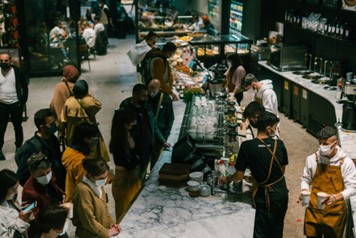
Within modern society, coffee shops serve as social hubs, offering an ideal setting for individuals looking for a quick respite as well as providing us with critical information regarding the nuances of gendered interactions between service workers and customers. Interactions between service industry workers and customers play a key role in shaping the experiences within public spaces, revealing broader societal norms and dynamics. In this research paper, we investigate how the dynamics of service worker-customer interactions in coffee shops are impacted by gender, specifically focusing on various aspects such as word choice, personability, and politeness. This paper is focused on studying these interactions between the demographic of American college students, with data collection taking place in coffee shops in Westwood Village, close to the campus of the University of California Los Angeles. By analyzing these factors, we aim to contribute to the understanding of gender dynamics within service interactions, uncovering any patterns or disparities present. Our hypothesis posits that female-presenting customers are more likely to exhibit politeness towards service workers compared to their male-presenting counterparts. Additionally, we anticipate greater deviations from the conventional ordering process when the gender presentation of the customer aligns with that of the service worker.
Background
In observing service encounters, we see various linguistic properties which are present in communicative patterns, contributing to the dynamics of interaction. Some specific examples include politeness strategies, turn-taking patterns, gestures, and lexical choices. Politeness theory, developed by linguists Brown and Levinson is quite in-depth, and the following video made by the University of Vienna does a great job of simplifying some of its more complex aspects: https://youtu.be/e-B-kJi0Rek. Speakers often use politeness strategies to maintain positive social relations. The desire to be perceived as kind or polite is an example of a term known as positive face (Brown and Levinson 2006). As many people wish to be accepted and liked by others, we expect most customers to utilize positive face techniques such as smiling or engaging with the server in conversation outside of their order. This can involve using polite language, such as “please” and “thank you,” or softening directives and requests. In addition, conversations typically follow turn-taking patterns, where speakers take turns to contribute to the interaction. Signals such as pauses, intonation, or body language help regulate conversation flow and indicate when it is appropriate to speak. Moreover, nonverbal cues like facial expressions, gestures, and body language are also important. They complement verbal communication and may convey sincerity, friendliness, or authority. Lastly, the selection of words and phrases reflects cultural norms, social roles, and individual identities. Lexical choices can influence identity, social status, or group membership, contributing to the overall tone and meaning of the interaction.
Similarly, the data samples we have gathered closely align with these linguistic properties and patterns seen in other service encounters. A previous study, which looked at female politeness towards other females versus towards males, found that gender played a pivotal role in the presence of politeness. The authors found that females were more likely than males to speak politely to others, especially when speaking with other females (Keikhaie and Mozaffari 2015). Across the interactions in our research, both baristas and customers use polite greetings, express gratitude, and use personalized terms to address each party, fostering a friendly and welcoming atmosphere. Turn-taking patterns were also observed, with participants getting a chance to speak and respond. Additionally, positive body language, such as smiling and maintaining eye contact, contributes to a positive customer experience by maintaining an informal and relaxed environment. Overall, the data illustrates the importance of these linguistic elements in effective communication during service encounters.
Methods
The methods we used for data collection were non-participant covert observation and conversation analysis. We opted for non-participant covert observation of the interactions between the customer and barista in order to understand the social reality and implicit features of the interactions. With the participants not knowing that they are being observed, it ensures that the data is the most accurate and unbiased as it can be. We will also be analyzing the conversations we observe to investigate and gain more insight into the deeper meaning of the words and actions throughout the interactions.
To guide this research, our general research question is, do levels of politeness differ in server-customer interactions based on gender? Within this question, we also have some more specific focuses. They are as follows: How do different genders express and navigate face-saving and face-affirming behaviors through mechanisms such as hedging and politeness markers?; Do levels of intimacy and politeness differ in same-gender interactions as compared to different-gender interactions?; Are male or female-identifying people treated with more politeness?; Do male or female-identifying people use more politeness markers? Our general hypothesis is that females will use more face-saving behaviors and be less direct when ordering and interacting with customers.
Results
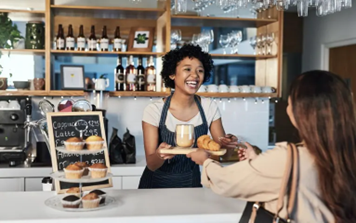
In order to gain a more complete understanding of the gendered relationships between customers and service workers, we collected data from different coffee shops in the Westwood neighborhood of Los Angeles, California. The coffee shops that we collected data from include Alfred Coffee, Starbucks, Ministry of Coffee, and Stereoscope in Hollywood. Our general hypothesis for our research was that females would use more face-saving behaviors and be less direct when ordering and interacting with customers. Based on our data samples taken from various coffee shops, it can be seen that females are more likely to initiate an interaction and use pleasantries during a service encounter. After analyzing the 17 conversational samples that we have collected thus far, we were able to group some behaviors that we felt applied to our hypothesis. The following categories are presented below, accompanied by examples derived from the dataset.
Hedging
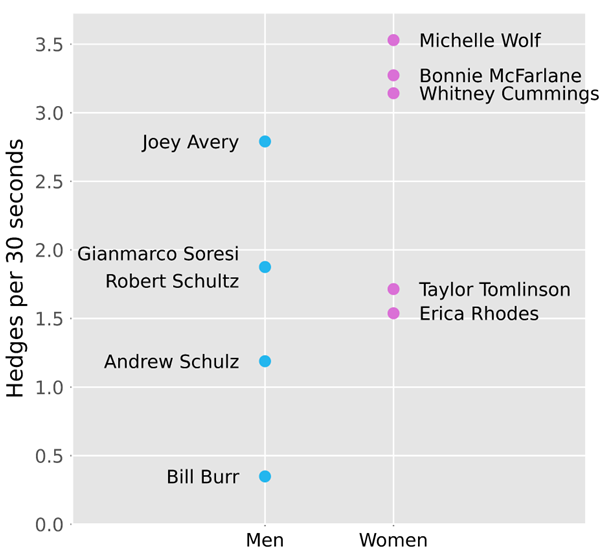
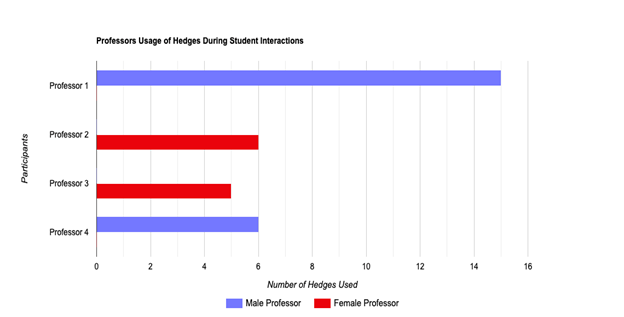
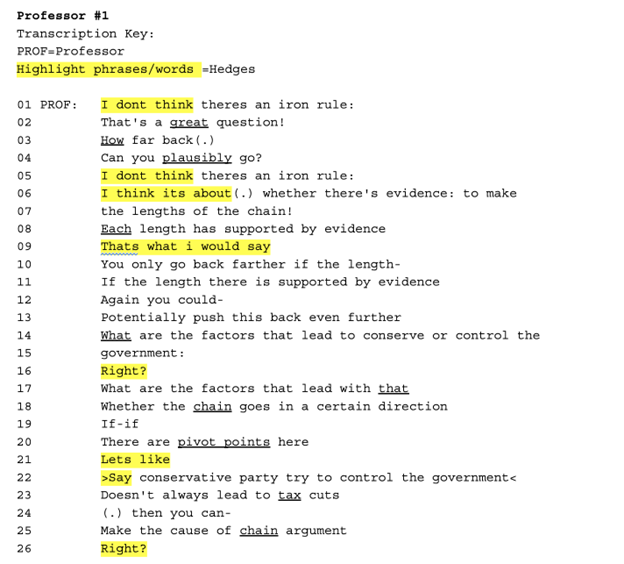
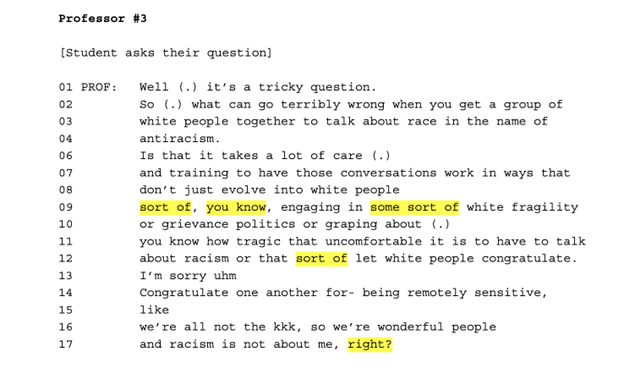
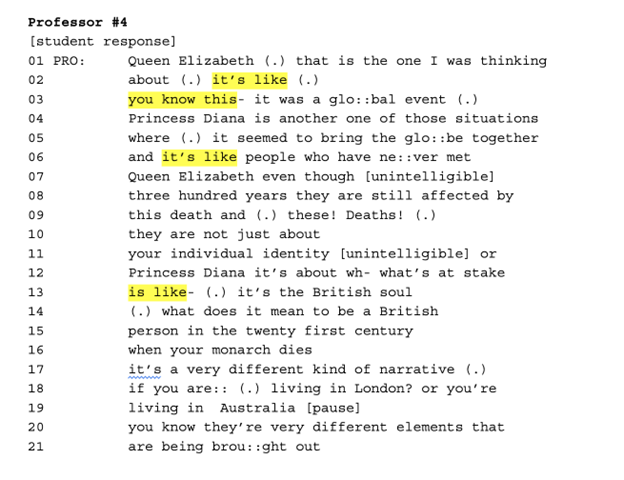
The data revealed distinct gendered differences in the interactions between customers and service industry workers. Our observations consistently indicated hedging behavior among female customers, evidenced by the frequent use of words such as “um” and employing indirect language when placing orders. Female customers had the tendency to substitute “could” for “can” during these brief interactions. Additionally, the hedging term “just” was more prevalent in the speech of female customers within the dataset. Furthermore, female customers exhibited greater pauses or displayed hesitance while placing their orders.
Introductory Greetings
Across all data sets, we found that female service industry workers were more likely to ask the customer how they were doing in addition to giving a standard greeting. Additionally, the data show that although both male and female baristas will initiate the interaction between them and their customers, females are more likely to ask about a customer’s well-being as part of the introductory greeting.
Politeness Markers
The data show that the majority of the time, female customers were significantly more likely to say “please” while making their requests. Additionally, we found that across all the data sets, there was less smiling involved in male-to-male interactions. One data set found that the male barista solely smiled at female customers, maintaining a neutral expression for male customers.
We found that female customers are more likely to respond politely and provide detailed information about their order, contrasting with the male customer’s direct and concise style.
Volume
Based on the observed data, both the customers and service industry workers maintained a consistent volume level throughout the majority of their interactions, with subtle variations in assertiveness, such as a female barista taking a slightly more assertive tone during certain interactions. Across all data sets, we found that the volume of female speakers in both roles was lower than that of their male counterparts. We also found that female customers tended to end their sentences with a higher pitch, while male customers kept their tone and volume consistent throughout the entire interaction.
Length of Discussion
Across all data sets, the longest discussions that took place were in female-female interactions while the shortest interactions tended to be in male-male interactions, with very few pleasantries.
We observed a consistent pattern between these interactions with the deviations occurring primarily in female-female interactions. One deviation that we recorded was a female barista complimenting a female customer’s sweater. Additionally, we recorded a sense of friendliness and camaraderie when a female barista made a mistake when taking an order from a female customer and the two laughed together. Across all the interactions, the male-male interactions required significantly less clarification of their orders. We were able to conclude that longer interactions are likely characterized by the female customer providing detailed information about their order. Male customers usually order without much elaboration, thus leading to shorter and more direct interactions.
Discussion
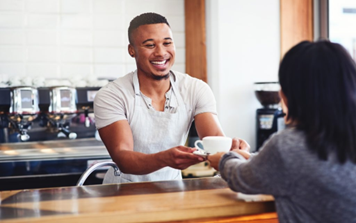
The data show that there are significant gender differences in the interactions between service industry workers and customers. The results of this study show that there were gendered differences in hedging, introductory greetings, politeness markers, volume, and discussion length. Female customers were significantly more likely to exhibit hedging behaviors than their male counterparts, demonstrating hesitation and less confidence in the interaction overall. While male customers rarely demonstrated hedging behavior and tended to have a more dominant approach to the conversation, especially when speaking to a female barista. Additionally, the data show that although both gendered service industry employees provided some sort of greeting, female service industry workers were significantly more likely to ask the customer about their well-being in addition to providing a standard greeting.
While surveying politeness markers, the data show that female-presenting customers were more likely to utilize polite terms such as “please” and “thank you” than male-presenting customers. Additionally, our study found that female-presenting customers were more likely to respond politely and provide more detailed information regarding their order while male-presenting customers tended to adopt a more concise and direct approach. Across all data sets, we found that there were fewer non-verbal politeness cues such as smiling in male-male interactions. Previous studies have produced similar results that show females interacting with other females will utilize polite behavior more often than their male counterparts. The authors explain that this may be because women are more conscious of rejection and stigma and therefore put in more effort to be perceived in a positive way (Keikhaie and Mozaffari 2015). In our research, the male-presenting customers had the tendency to adopt a more dominant and less friendly approach to these interactions, highlighting their perception of their importance and role within this particular community.
In terms of volume, our data show very little variation. Both gender identities maintained a consistent volume throughout their interactions, however, female-presenting customers and service workers utilized a lower volume overall, ending their sentences with a higher pitch. Alternatively, while studying conversation length, we found that female-female interactions were significantly longer than male-male interactions. This variation is due to the use of more pleasantries in female-female interactions as well as the absence of these pleasantries and the more direct tone used in male-male interactions.
While our study is able to successfully identify gender differences in hedging, the presence of introductory greetings, politeness markers, volume, and discussion length, it is important to note that our research is primarily focused on the Los Angeles neighborhood of Westwood. Although the individuals who visit local Westwood establishments possess very diverse backgrounds and gender identities, this is not the case in all communities across the United States. Different communities may have differing opinions on gender identities and thus have drastically different interactions based on their community’s view on gender identities. In order to gain a more complete understanding of how these interactions between service industry workers and customers vary by gender, more research must be done examining broader geographical areas. By expanding the geographic range of this study, we will be able to come to a more concrete understanding of the different practices and patterns utilized between different genders in service industry interactions.
Conclusion
After conducting a thorough literature review as well as completing data collection such as observations and conversation analyses, we found that female-presenting customers and service industry workers were significantly more likely to utilize polite behaviors than their male-presenting counterparts. The data show clear patterned differences between these service industry interactions in the categories of hedging, the presence of introductory greetings, politeness markers, volume, and the length of the interaction. In each of these categories, the female-presenting customers and service industry workers utilize more polite approaches when addressing each other and members of the opposite gender. These results provide valuable information regarding not only the gender roles within service industry interactions but also the underlying social norms and dynamics within a public sphere.
References
Brown, P., & Levinson, S. C. (2006.). Politeness: Some Universals in Language Usage. In The Discourse Reader (2nd ed., pp. 311–323). Routledge: Taylor & Francis Group.
Forseth, U. (2005). Gender matters? Exploring how gender is negotiated in service encounters. Gender, Work & Organization, 12(5), 440–459. https://doi.org/10.1111/j.1468-0432.2005.00283.x
Gibson, E. K. (2014, May 27). Would you like manners with that? A study of gender, polite questions, and the fast‐food industry. Academia.edu. https://www.academia.edu/4031180/E._K._GIBSON_-_A_study_of_gender_polite_questions_and_the_fast_food_industry
Hultgren, A. K. (2017). New perspectives on language and gender: Linguistic prescription and compliance in Call Centres. Language in Society, 46(5), 671–695. https://doi.org/10.1017/s0047404517000574
Keikhaie, Y., & Mozaffari, Z. (2015). A Socio-linguistic Survey on Females’ Politeness Strategies in the Same Gender and in the Cross-Gender Relationship. Iranian Journal of Applied Language Studies, 5(2), 51-82. doi: 10.22111/ijals.2015.1877
Schnabel, Lukas. “Politeness in Linguistics: An Overview.” YouTube, uploaded by Lukas Schnabel, 23 June 2019, https://youtu.be/e-B-kJi0Rek
Taylor, J. L. (n.d.). I Need a Coffee: Pragmalinguistic Variation of Starbucks Service Encounter Requests According to Interaction Modality. Indiana University. https://scholarworks.iu.edu/journals/index.php/iulcwp/article/download/26219/31840/61913
West, C. (1993). Reconceptualizing gender in physician-patient relationships. Social Science & Medicine, 36(1), 57–66. https://doi.org/10.1016/0277-9536(93)90305-n