A Digital Take on Modern Model Minority: Not So Subtle Asian Traits
Subin Kim, Jihee Choi, Fiona Dai, Chris Ngo
This study investigates social implications of Asian Americans being stereotyped as a model minority. The notion of the model minority basically highlights only positive aspects and successes of a group, while ignoring or downplaying the negative aspects and characteristics. Many Asian Americans have been preconceived as “nerdy” which fits the stereotype of the model minority. To be more specific to this topic, we examined how the idea of the model minority is actually used in Asian Americans’ daily life through the most popular medium of social interaction among adolescents and young adults nowadays– social media. Based on the purpose for this study, data was collected from a Facebook group called Subtle Asian Traits which has more than 1.6 million members and is shared with diverse posts of the discourse styles mostly related to Asian cultures. The posts were then analyzed for content involving the concept of model minority, and divided into two categories. Between the two groups are those fitting the stereotype of model minority, and those in which involve school de-emphasis content and African American Vernacular English (AAVE) slang. Through analyzing this study, the model minority was considered to connect with positive outcomes and reduce some negative effects of discrimination.
Introduction
Society tends to categorize people based on certain traits and characteristics. These traits are shaped by an individual’s own background through ethnicity, culture, gender, and upbringing. Although most people know that individuals are varied in personality and traits, they tend to have preconceived notions about groups of people due to these categorizations, or stereotypes. Stereotype experiences are often associated with negative discrimination due to their conceptual overlap. However, we want to differentiate the two ideas in this study since previous research has found positive effects of certain stereotypes (Kiang, Witkow, and Thompson, 2015) and therefore stereotypes can be examined with or without negative discrimination. To further distinguish these two concepts, we will define negative discrimination as “biased actions or behaviors toward an individual due to his or her group membership” that are typically adverse based on Fishbein’s study on “Peer Prejudice and discrimination” (1996). Many studies in recent years have demonstrated the efficiency function of stereotypes which reduces one’s cognitive load (Sherman & Frost, 2000). That is, when one is dealing with cognitively demanding duty, such as multitasking, one can rely on stereotypes to save processing capacity and thus increase working efficiency.
We will focus on this stereotype often associated with Asians, the model minority image of Asians as diligent overachievers in this paper. The model minority image was formally identified over a half century ago (Peterson, 1966), and it still persists in social environment today. According to Poon, Squire, Kodama, Byrd, Chan, Manzano, Furr, and Bishundat (2015), the model minority is “a monolithically hardworking racial group whose high achievement undercuts claims of systemic racism made by other racially minoritized populations”. The idea of the model minority highlights the successes of the group, while ignoring or down playing the negative aspects and characteristics. In this specific case, Asians are typically seen as a “good” minority that succeeds and are considered “honorary whites”. It also lends itself regarding racism against Asians becoming normalized due to the fact that the traits of Asian stereotypes are considered desirable. Prior study has suggested that the model minority image of Asians could provoke unfair treatment from peers in the form of negative discrimination (Niwa, Way, & Hughes, 2014).
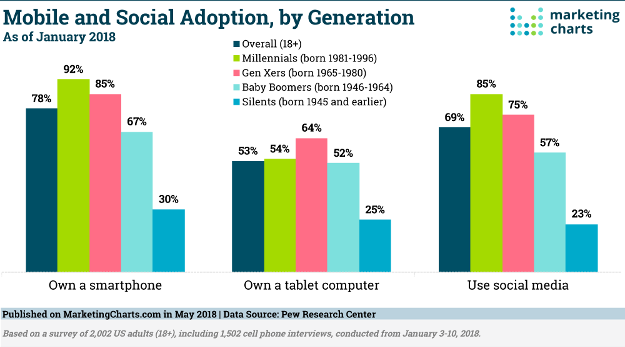
Due to model minority status highlighting academic success, Kiang et al. have examined the developmental implications of being stereotyped as model minority in Asian American adolescents (2015). The time period from adolescence to early adulthood is worth investigating because one goes through ethnic exploration and identity formation within this time frame and later become stable. Moreover, research has shown that over 99% of Asian adolescents have had at least one in which they perceived as being stereotyped as a model minority (Thompson & Kiang, 2010). Kiang et al. (2015) have measured perceived stereotypes and negative discrimination using self-report surveys, but no study has yet examined perceived model minority through the most popular medium of social interaction among adolescents and young adults nowadays – Facebook.
In this paper, we aim to investigate the implications behind Asian adolescents and young adults’ stereotypes and ethnic-based social interaction on social media by virtue of analyzing the model minority concept related posts on the Facebook group called Subtle Asian Traits. Kiang et al., (2015) have found that the model minority experience is connected to positive outcomes and can reduce some of the negative effects of discrimination on academic adjustment through the quantitative method. We will qualitatively test whether their findings still hold true in social media.
Background
We primarily collected data for this study on a Facebook group called Subtle Asian Traits. Facebook is one of the most widely used social networking services in the U.S. Facebook may be used to facilitate new relationships and maintain existing relationships according to Ellison, Steinfield, and Lampe’s study on Facebook “friends” (2007). Similarly, Facebook can be a great tool for groups with common characteristics to express their respective identities. For the same reason, a group of high school students who share the same ethnic identities–Asian Australians–formed the Subtle Asian Traits Facebook group one year ago with the intention of creating a platform for English speaking Asians to exchange their shared cultural experiences.
We wish to investigate the discourse style the population uses in the Facebook group. It has more than 1.6 million members and contains memes–humorous images, videos, microtexts, etc.–that are mostly related to Asian culture. In the group, the largest population was Chinese, followed by Vietnamese, Filipinos, Koreans and Taiwanese. In addition, the group is made of people from all Asian countries. This is including, but not limited to: Malaysia, Japan, Indonesia, Cambodia, Thailand and Hong Kong. The group’s population tend to be from a variety of places, but is mostly composed of Westernized Asians.
The stereotypes that people usually have for Asians is that they portray positive characteristics such as being nerdy and intelligent; however, every group or ethnicity cannot be defined by the same features or characteristics. Therefore, Asians cannot be considered that they conform to a “nerdy” and successful stereotypes. To break this discrimination, we will discuss how the newer generation of English speaking Asians are diverging from the model minority stereotype by creating a counter culture that tends to appropriate African American vernacular English (AAVE). According to the journal “Appropriation of African American slang by Asian American youth”, the author explains that non-African Americans have followed and imitated African American black culture and slang. It is shown that one’s identity is identified by the language and slang that he or she uses, not discriminated by race. Likewise, the group such as the Subtle Asian Trait were created to humorously refine negative images and change stereotypes.
Project Design
The data sample in this study consisted of fifty-six posts from the Subtle Asian Traits Facebook group. We first chose two categories of keywords: 1) academic related such as “study,” “exams”, and 2) AAVE slang, e.g., Finna, Bae, Plug, Finesse. Then we manually selected thirty posts for the academic related category and twenty-six posts for the AAVE category. Furthermore, because the average “likes”– a characteristic of the posts occurred from members’ agreement with the post within this Facebook group–was 1,000 to 2,500, we decided to only include those posts that had over 2,000 “likes” so that the posts we selected were able to represent what was popular in this 1.6 million member Facebook group.
Results
The results for our data were divided into two groups. One group showed a tendency to match the characteristics of the model minority. The other group did not fit this mold, but instead showed signs of attempting to break free from it.
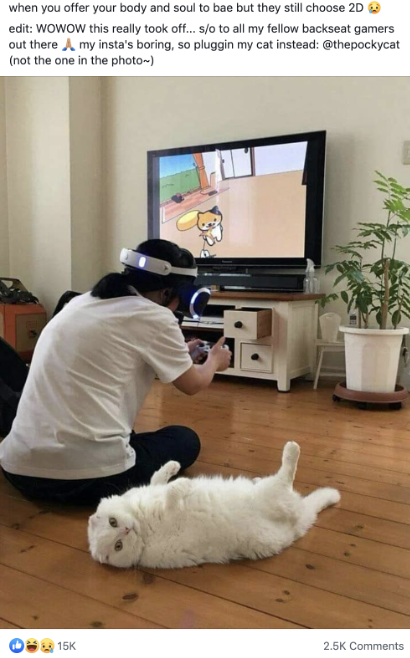
In one group, English-speaking Asians express difficulties and hardship about getting stressed when they study. They showed more empathy for their difficulties when involving Asian social content such as Doraemon, Soju, and Bangtan Boys. Some data is still focused on exam and studying, which shows doing well on exams is a popular topic within the group. In the other group, English-speaking Asians attempted to change stereotypes by emulating black culture and AAVE slang. One of the data showed empathy for a new culture using AAVE words such as ‘peeps’ and ‘twerking’. Furthermore, for example, people used AAVE ‘sup’ combing their language ‘wo’ which means ‘I’, so they could make AAVE word ‘wassup’ with their own meaning that ‘say hello to myself’. They tended to be more interested in content regarding partying and general school de-emphasis items. This stands in contrast to the current perception of the Asian model minority of nerdy, submissive, and rule abiding. Overall, our data showed that some of English-speaking Asians stuck to the concept of model minority, but the other tried to change and deviate their stereotypes.
Discussion and Conclusions
The results showed primarily two different distinct groups within Subtle Asian Traits. While these groups have some overlap, there is a significant voice and content difference. Our hypothesis mainly discussed only one of these groups, those conforming to the modern model minority stereotype. Within our research, however, we did encounter this counter group that seeks to diverge from previous notions thought about Asians. This split can be attributed to those forming groups based on shared stereotype-based interactions, and also those seeking to separate from previous ideals and instead relating to other ethnic groups.
For those breaking from the idea of the model minority, it can be seen that many seek identity within other minority groups. A previous study has shown that Asians borrowing AAVE slang terms are often an attempt to be the “Other Asian” and rely on stereotypes of other racial groups to construct an identity of their own (Reyes, 2005). This “Other Asian” changes the view of the Asian model minority and shifts the focus to a new perspective. The model minority is often a binary view that many individuals in this group find themselves forcibly conforming to. Rather than using AAVE to “act black” or as a different race, it can be argued that this new group uses slang to create their own identify, separate from any previous groups. While fashioning a new identity, however, those in this new subgroup can still visibly benefit from the positive outcomes of the model minority.
A previous study has shown that the effect of discrimination on Asian American adults’ distress varied depending on social context and the environment’s ethnic density (Syed & Juan, 2012). However, with the emergence of social media, such as Facebook and the prevalent usage of such platform among adolescents and young adults, we argue that the distress can be attenuated by sharing similar stereotyped-based social experience with each other on social media and thus creating a in-group sentiment. Additionally, Kiang et al. (2015) has suggested potential differences among Asians who reside in traditional settlement areas, such as Los Angeles or New York City, that have a long history of immigration and non-traditional ones that are emerging immigrant communities. Through the increasing popularity of social media usage, we believe that the regional differences will be diminished.
The model minority related posts have shown a system of camaraderie amongst the group users on Subtle Asian traits. As stated before, the model minority experience is oftentimes connected with positive outcomes and can actually reduce some of the negative effects of discrimination. Through the posts analyzed, the in-group sentiments created have shown a positive impact in which members relate to academically based posts. The posts show positive reinforcement towards the idea of high academic achievement, while also maintaining the positive aspects of the model minority stereotype.
Two new forms of Asian identity have emerged as a result of new age model minority. The two orientations have allowed for Asian youth and young adults to connect and establish new identities, while participating in their own new form of subculture. As it takes a discourse approach, social media allows for more analysis on the creation of new identities and formations of previous stereotypes and groups.
References
Ellison, N. B., Steinfield, C., & Lampe, C. (2007). The benefits of Facebook ‘‘friends’’: Social capital and college students’ use of online social network sites. Journal of Computer-Mediated Communication, 12(4), 2–3. Retrieved 24.11.19 from http://jcmc.indiana.edu/vol12/issue4/ellison.html
Fishbein, H. D. (1996). Peer prejudice and discrimination: Evolutionary, cultural, and developmental dynamics. Boulder, CO: Westview Press.
Kiang, L., Witkow, M.R. & Thompson, T.L. J Youth Adolescence (2016) 45: 1366. https://doi.org/10.1007/s10964-015-0336-7
Niwa, E. Y., Way, N., & Hughes, D. L. (2014). Trajectories of ethnic– racial discrimination among ethnically diverse early adolescents: Associations with psychological and social adjustment. Child Development, 85, 2339–2354. doi:10.1111/cdev.12310.
Peterson, W. (1966). Success story: Japanese-American style. New York Times Magazine, 9, 20–43.
Poon, OiYan; Squire, Dian; Kodama, Corinne; Byrd, Ajani; Chan, Jason; Manzano, Lester; Furr, Sara; Bishundat, Devita (June 2016). “A Critical Review of the Model Minority Myth in Selected Literature on Asian Americans and Pacific Islanders in Higher Education”. Review of Educational Research. 86 (2): 469–502. doi:10.3102/0034654315612205. ISSN 0034-6543.
Reyes, A. (2005), Appropriation of African American slang by Asian American youth1. Journal of Sociolinguistics, 9: 509-532. doi:10.1111/j.1360-6441.2005.00304.x
Sherman, J. W., & Frost, L. A. (2000). On the Encoding of Stereotype-Relevant Information Under Cognitive Load. Personality and Social Psychology Bulletin, 26(1), 26–34. https://doi.org/10.1177/0146167200261003
Syed, M., & Juan, M. J. D. (2012). Discrimination and psychological distress: Examining the moderating role of social context in a nationally representative sample of Asian American adults. Asian American Journal of Psychology, 3, 104–120. doi:10. 1037/a0025275.
Thompson, T. L., & Kiang, L. (2010). The model minority stereotype: Adolescent experiences and links with adjustment. Asian American Journal of Psychology, 1(2), 119–128. doi:10.1037/a0019966.